Why Chinese Technology Companies Struggle to Find the Right U.S. Legal Counsel
Unitree's recent remarks on overseas legal services point to a problem that goes beyond language, legal qualifications, or the cost of retaining foreign counsel.
- Cross-Border Advisory
- Technology Compliance
- U.S. Market Entry
- Robotics
- FCC Covered List
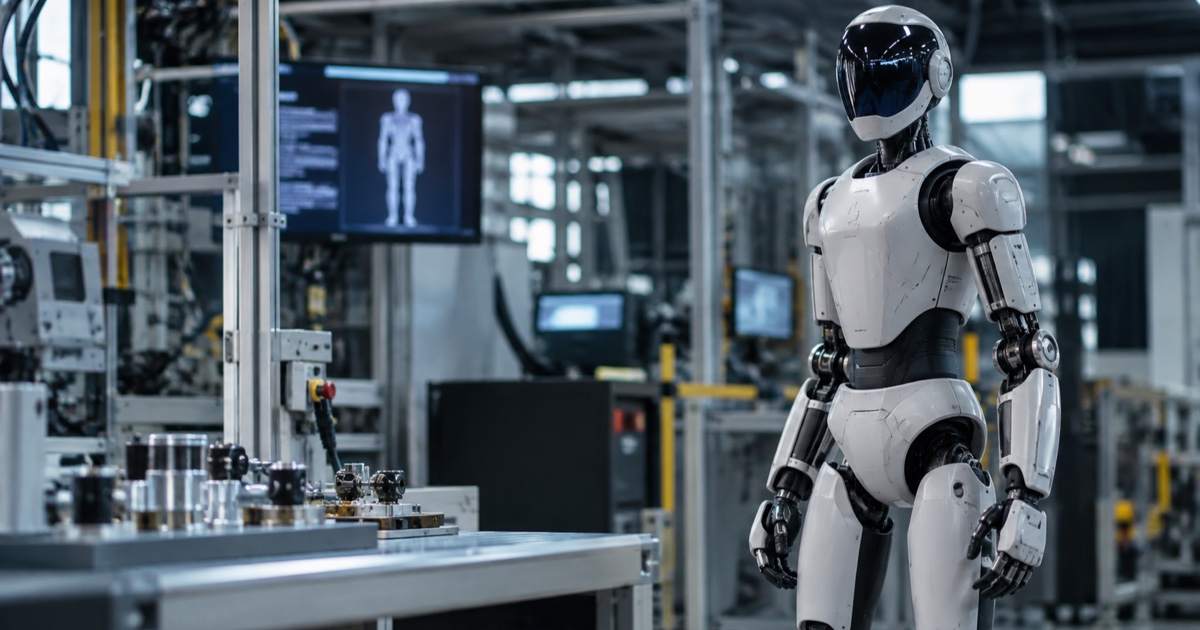
At the China International Import Expo in Shanghai on November 5, Unitree Robotics founder Wang Xingxing made a remark that attracted considerable attention in China's legal and business communities. His company, he explained, had been looking for lawyers familiar with U.S. and other overseas laws for more than a year, with limited success. The difficulty was not a reluctance to spend money. Unitree was prepared to engage professional advisers, but finding the right firms and knowing whether their services would meet the company's needs had proved unexpectedly difficult.
There is something revealing about this account. Unitree is hardly a newcomer to international business. According to Wang, the company began pursuing overseas markets in 2018 and has long regarded international sales as part of its business. Yet experience selling products abroad does not necessarily make it easier to navigate the legal systems in which those products are sold. Nor does a willingness to pay substantial legal fees guarantee access to advice that a business can confidently act upon.
The United States has no shortage of sophisticated law firms. Its legal market includes practitioners with extensive experience in international trade, national security, telecommunications regulation, corporate transactions, and commercial litigation. Why, then, would an established Chinese technology company have difficulty finding suitable counsel?
The answer may lie less in the availability of lawyers than in the way cross-border legal problems are identified, assigned, and ultimately resolved.
The Lawyer a Company Needs Is Not Always the Lawyer It First Retains
A Chinese technology company entering the U.S. market will often begin with familiar legal questions: whether to establish a subsidiary, how to structure a distribution relationship, what contractual protections it needs, and how to protect its intellectual property. These are substantial matters, and experienced corporate counsel can address them. But a company may complete that work only to encounter a regulatory issue that falls outside the original engagement.
Consider a manufacturer preparing to introduce a new autonomous robot into the United States. Its U.S. counsel may have assisted with incorporation and negotiated a distribution agreement. Neither assignment necessarily establishes whether the robot can obtain the federal equipment authorization required for lawful marketing or sale. That question may fall within the practice of a telecommunications regulatory lawyer who needs to examine the product's technical specifications, manufacturing arrangements, and authorization history. If the same company is also concerned about tariffs or export restrictions, additional specialists may be required.
This is not evidence that the first lawyer was incompetent. It reflects how legal practice in the United States is organized. Lawyers tend to specialize by subject matter, regulatory agency, and type of proceeding. Even within a large international firm, expertise in corporate transactions, FCC regulation, customs law, and national security may reside in separate teams. A client describing its problem simply as "entering the U.S. market" may therefore be asking one lawyer to answer questions that properly belong to several.
For a company unfamiliar with this division of professional responsibility, the difficulty can be considerable. An engagement letter may define a narrow scope of work without the client fully appreciating what has been excluded. Advice may be technically sound but incomplete for the decision management is trying to make. By the time the missing issue becomes apparent, a product launch may already have been scheduled, inventory ordered, or contractual commitments undertaken.
This helps explain why choosing counsel cannot be reduced to comparing law firm rankings, billing rates, or the number of lawyers qualified in multiple jurisdictions. The more important inquiry is whether the proposed legal team has correctly identified the problem and possesses the particular expertise required to address it. A well-known firm may be an excellent choice for one assignment and an unnecessary or unsuitable choice for another.
Unitree's public comments do not establish that the company experienced any particular failure of this kind. They do, however, raise a question that is increasingly relevant to Chinese businesses operating abroad: how can a company assess the quality and suitability of foreign legal advice before it has enough familiarity with the foreign legal system to know what it should be asking?
Recent U.S. Robotics Measures Show Why the Distinctions Matter
Developments in U.S. robotics regulation during 2026 offer a particularly useful example of the difficulties involved.
On July 28, the Federal Communications Commission added foreign-produced advanced robotic devices to its Covered List under the Secure and Trusted Communications Networks Act. Equipment within the covered category is generally ineligible for new FCC equipment authorization. Because equipment authorization is a prerequisite for marketing or importing many electronic devices into the United States, the designation can have substantial consequences for manufacturers seeking to introduce new products.
A superficial reading might suggest that the FCC has prohibited Chinese robots from entering the American market. That would be an inaccurate description of the measure.
The designation turns on the regulatory definition of the equipment and its production characteristics, rather than simply the nationality of the company selling it. The covered category includes certain mobile robotic devices capable of remote or autonomous operation that meet specified requirements concerning weight, sensors, connectivity, and software. Fixed industrial robots and certain other devices are excluded. Products that already received FCC authorization before the designation are also treated differently from new models seeking authorization.
There is a further qualification. The framework allows certain devices to obtain conditional approval and thereby qualify for an exemption from the Covered List. In September, the FCC announced conditional approvals for specified advanced robotic devices.
These details are not minor technical exceptions. They may determine whether a company can continue selling an existing model, whether changes to a product require further regulatory analysis, and whether a planned launch can proceed. They also illustrate why the relevant legal work cannot be separated from engineering and manufacturing information. Counsel cannot reliably assess the position of a particular robot without understanding what the device does, where and how it is produced, and what authorizations it has already received.
The distinction between corporate nationality and product treatment is especially important. Incorporating a subsidiary in Delaware or California does not automatically make a foreign-produced robot a domestic product for purposes of the FCC's rules. Nor does routing sales through an American distributor necessarily change the regulatory status of the underlying equipment. A company considering changes to its corporate structure or supply chain must understand which facts the applicable regulation actually treats as legally relevant.
A separate development followed on October 28, when the White House issued a proclamation concerning imports of robotics, industrial machinery, and related components under Section 232 of the Trade Expansion Act of 1962. Following a national security investigation, the administration directed federal officials to pursue negotiations with trading partners and report on their progress within 180 days. The proclamation also contemplated the possibility of future trade measures, including tariffs, quotas, and fees.
Unlike the FCC's Covered List designation, the October proclamation did not itself establish a new, across-the-board tariff on imported robots. Its immediate legal effect and its potential future commercial consequences must be considered separately. A company negotiating a supply agreement today may reasonably wish to account for the possibility of additional duties, but it would be wrong to treat a contemplated tariff as though it were already in force.
The two measures demonstrate how easily the expression "U.S. regulatory risk" can obscure very different legal questions. One concerns equipment authorization and product eligibility; the other concerns international trade and potential adjustments to imports. They arise under different statutes, involve different government authorities, and require different forms of legal expertise. A lawyer's familiarity with one does not necessarily establish competence in the other.
For a robotics manufacturer, the practical consequence may be that advice obtained at the outset of a transaction needs to be supplemented as the product and regulatory environment develop. A legal opinion addressing the company's initial entry into the United States may remain correct within its stated scope while leaving unanswered questions about a later product model or a newly announced trade measure. The limits of the original advice matter just as much as its conclusions.
What Companies Should Expect From Cross-Border Counsel
Much of the discussion surrounding Chinese companies' access to overseas legal services focuses on expanding professional networks, cultivating internationally qualified lawyers, or improving access to foreign law information. These efforts are useful, but they address only part of the problem.
The harder question is how a business ensures that the legal advice it receives is responsive to the decision it actually faces.
A company asking whether it can sell a robot in the United States may not need a lengthy general memorandum on American technology regulation. It may need a determination of whether a specific model falls within the FCC's definition of an advanced robotic device, what evidence supports that determination, and whether an available authorization or exemption changes the result. Depending on the facts, the answer may require input from engineers or specialized regulatory counsel. It may also require the lawyer to explain where the available information is insufficient to reach a reliable conclusion.
The same principle applies to legal costs. American law firms commonly bill according to the time spent by professionals at different levels of seniority, although fixed-fee and other alternative arrangements are also available. For clients accustomed to different billing practices, the final cost of an engagement can be difficult to anticipate. That uncertainty becomes more serious when the original scope of work is poorly defined or multiple specialists are brought into a matter without a clear allocation of responsibility.
The appropriate response is not necessarily to seek the least expensive adviser. A narrowly scoped assignment handled by an experienced specialist may ultimately be more efficient than a broad engagement that produces extensive research without resolving the relevant commercial question. Conversely, an unusually low fee may offer little value if essential regulatory issues have been excluded from the engagement.
It is also important to distinguish the work of lawyers from the functions that a company's own legal, compliance, or business teams should perform. External counsel cannot be expected to reconstruct a manufacturer's product architecture, determine its commercial priorities, or maintain an accurate record of its contractual commitments. Those responsibilities require meaningful participation from the company. Lawyers can identify the facts relevant under the law, explain the consequences of alternative courses of action, and advise on matters within their professional competence. Management must provide reliable information and decide how the business will respond.
For Chinese companies, this division of responsibility is often complicated by the fact that legal and technical information originates in one jurisdiction while the legal advice is delivered in another. Product descriptions, manufacturing records, and internal decisions may need to be translated, explained, or reorganized before foreign counsel can use them effectively. Errors at that stage can compromise even otherwise competent advice.
The need for coordination is therefore real, but coordination should not be confused with the provision of legal advice itself. Where a matter involves U.S. law, substantive legal opinions and representation must be undertaken by professionals authorized to perform the relevant work. Cross-border project management, regulatory research, and the organization of technical or commercial information may assist that process, but they do not replace the judgment of qualified counsel.
This distinction also has implications for the development of legal services in China and Hong Kong. Wang suggested that Hong Kong's legal market and international connections could help Chinese businesses identify appropriate overseas professional resources. There is merit in that proposition. A reliable network can reduce the time and uncertainty involved in locating suitable advisers. Yet the usefulness of such a network ultimately depends on the quality of its professional assessment and the clarity of the responsibilities assigned to each participating adviser.
A referral is only the beginning of a legal engagement. The client still needs to know what the lawyer will examine, which questions remain outside the agreed scope, what information must be provided, and how the resulting advice will affect the proposed transaction.
A Legal Services Problem That Will Outlast the Current News Cycle
The attention surrounding Unitree's remarks will likely fade. The underlying difficulty is less likely to disappear.
Chinese technology manufacturers are operating in a U.S. regulatory environment where longstanding commercial law requirements increasingly interact with restrictions justified by national security and industrial policy. Robotics is one example, but similar issues arise in connected devices, advanced manufacturing, artificial intelligence, and other technologies whose commercial applications can overlap with sensitive infrastructure or strategic industries.
The immediate challenge for these companies is not to identify a single lawyer who understands every relevant area of American law. Such a person is unlikely to exist. It is to understand the legal dimensions of a proposed business activity well enough to engage the right specialists, obtain advice at the appropriate stage, and recognize the limits of what that advice establishes.
For law firms and other professional service providers working with international clients, the corresponding challenge is to make specialized expertise accessible without sacrificing precision. A client should not have to understand the internal organization of the American legal profession before it can obtain a useful answer to a commercial problem. At the same time, no responsible adviser should suggest that a complex regulatory question can be resolved without examining the facts that determine how the law applies.
Wang's comments are a reminder that the availability of legal expertise and a company's ability to use it are not the same thing. As Chinese technology companies move further into overseas markets, that difference deserves more attention than it has received.
This publication does not create an attorney-client relationship. The application of U.S. or foreign law to any particular transaction requires consideration of the relevant facts and, where appropriate, advice from qualified legal counsel.
References
- Phoenix Finance (reproduced by Sina Finance), reporting on Wang Xingxing's remarks at the China International Import Expo, November 5, 2026.
- Federal Communications Commission, Public Notice DA 26-786, Addition of Foreign-Produced Power Inverters and Advanced Robotic Devices to FCC Covered List, July 28, 2026.
- Federal Communications Commission, Public Notice DA 26-996, Conditional Approval and Exemption of Certain Advanced Robotic Devices from FCC Covered List, September 18, 2026.
- The White House, Adjusting Imports of Robotics, Industrial Machinery, and Their Parts and Components into the United States, October 28, 2026.
- Kirkland & Ellis LLP, Foreign-Produced Advanced Robotic Devices and Certain Foreign-Produced Power Inverters Added to FCC Covered List, August 27, 2026.
This article is published by Meridian Strategy Partners LLC for general informational and research purposes only. It does not constitute legal, tax, financial, investment, securities, accounting, or other regulated professional advice.
Back to Insights